
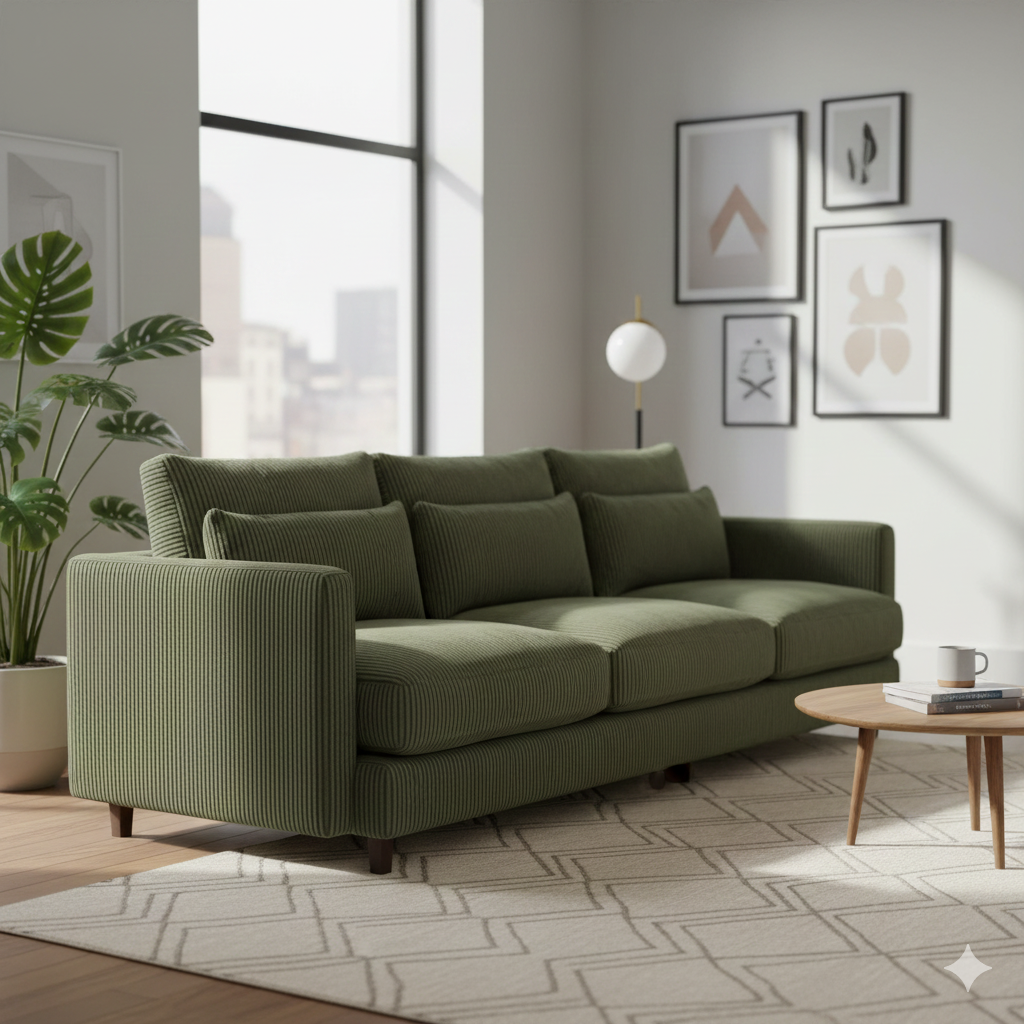
Soft Touch Corduroy Sofa: Balancing Comfort, Durability, and Market Appeal
In furniture sourcing, comfort is often described—but rarely defined.
Texture, warmth, and first contact shape how customers judge a sofa within seconds, long before structural performance becomes apparent.
This is why the soft touch corduroy sofa continues to resonate across residential and lifestyle-focused markets. Its appeal is not accidental. It combines tactile familiarity with material resilience, offering brands a way to deliver comfort cues without compromising durability—an approach increasingly reflected in fabric-focused sofa programs presented on the CV Castle homepage.
Why Corduroy Still Matters in Modern Sofa Upholstery
Corduroy is often associated with softness, but its relevance goes deeper than feel.
The ribbed weave structure of corduroy distributes surface contact across raised channels, reducing friction concentration and masking minor wear. When properly finished, this structure creates a surface that feels warm and inviting while remaining visually consistent under regular use.
For B2B buyers, this duality—comfort perception paired with durability—is what makes corduroy upholstery commercially reliable rather than trend-dependent.
What “Soft Touch” Really Means in Corduroy Fabrics
“Soft touch” is not a single treatment. It is the result of multiple controlled steps.
In corduroy sofa production, softness is influenced by fiber selection, pile height, brushing technique, and post-finishing processes. Excessive brushing can weaken fibers. Insufficient finishing leaves the surface coarse.
Manufacturers that understand corduroy balance softness with structural integrity, ensuring the fabric maintains hand feel without premature flattening or pilling.
This balance is especially important for sofas expected to perform across varied climates and usage patterns.
Comfort Perception Drives Buying Decisions—Especially Online
In e-commerce and showroom-light retail environments, customers rely heavily on visual and descriptive cues to assess comfort. Corduroy’s texture photographs well and communicates warmth and softness intuitively.
For brands and distributors, this reduces the gap between expectation and experience. When a sofa looks comfortable and feels comfortable, post-purchase satisfaction increases—even if internal construction remains comparable to other fabric sofas.
In this sense, soft touch corduroy upholstery functions as both a material choice and a conversion facilitator.
One Table Buyers Need: Corduroy Sofa vs Smooth Fabric Sofa
| Evaluation Factor | Soft Touch Corduroy Sofa | Smooth Fabric Sofa |
|---|---|---|
| Tactile Warmth | High | Moderate |
| Visual Texture | Distinct, forgiving | Clean, minimal |
| Wear Concealment | Strong | Limited |
| Comfort Perception | Immediate | Gradual |
| Style Positioning | Casual to premium | Modern to formal |
This comparison shows why corduroy sofas often succeed in markets prioritizing comfort-led positioning rather than minimalism alone.
Durability Considerations Buyers Should Not Ignore
Softness does not mean fragility—if corduroy is specified correctly.
Key durability factors include fabric weight, rib density, and backing stability. High-quality corduroy resists abrasion and maintains pile integrity over time, even in high-contact seating zones.
For B2B buyers sourcing soft touch corduroy sofas, verifying abrasion test results and colorfastness data helps ensure that tactile appeal remains consistent throughout the product lifecycle.
Where Soft Touch Corduroy Sofas Perform Best
Corduroy sofas are particularly effective in:
-
Family living rooms and casual seating spaces
-
Apartments and rental housing emphasizing comfort
-
Lifestyle-oriented retail collections
-
Markets favoring warmth over ultra-minimal aesthetics
They are less suited for environments requiring rigid formality or extremely high moisture resistance, where alternative fabrics may perform better.
From Fabric Choice to Brand Differentiation
Choosing a soft touch corduroy sofa is not simply about following a texture trend.
It is about shaping how customers emotionally connect with a product.
Brands that integrate corduroy thoughtfully—pairing it with stable internal structures and consistent manufacturing—can position comfort as a defining value rather than a vague promise. This approach aligns well with manufacturers emphasizing material-driven design systems, as seen across the CV Castle official website.
Final Perspective: Comfort That Holds Up Over Time
Soft touch corduroy sofas succeed because they meet customers where comfort begins—at first contact—while remaining durable enough to justify repeat sales and long-term use.
For B2B buyers evaluating upholstery options for new collections or private-label programs, discussing corduroy specifications, finishing methods, and durability testing early helps ensure that softness remains an asset rather than a liability.
You can start that conversation directly via the CV Castle Contact Us page to assess whether soft touch corduroy upholstery fits your product and market strategy.