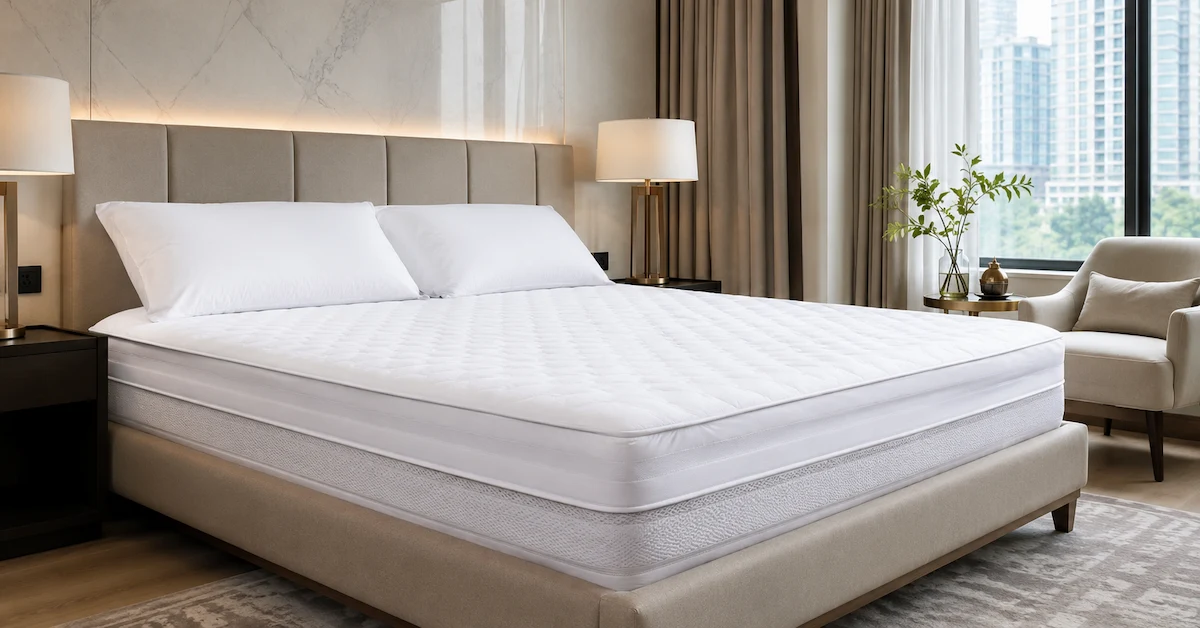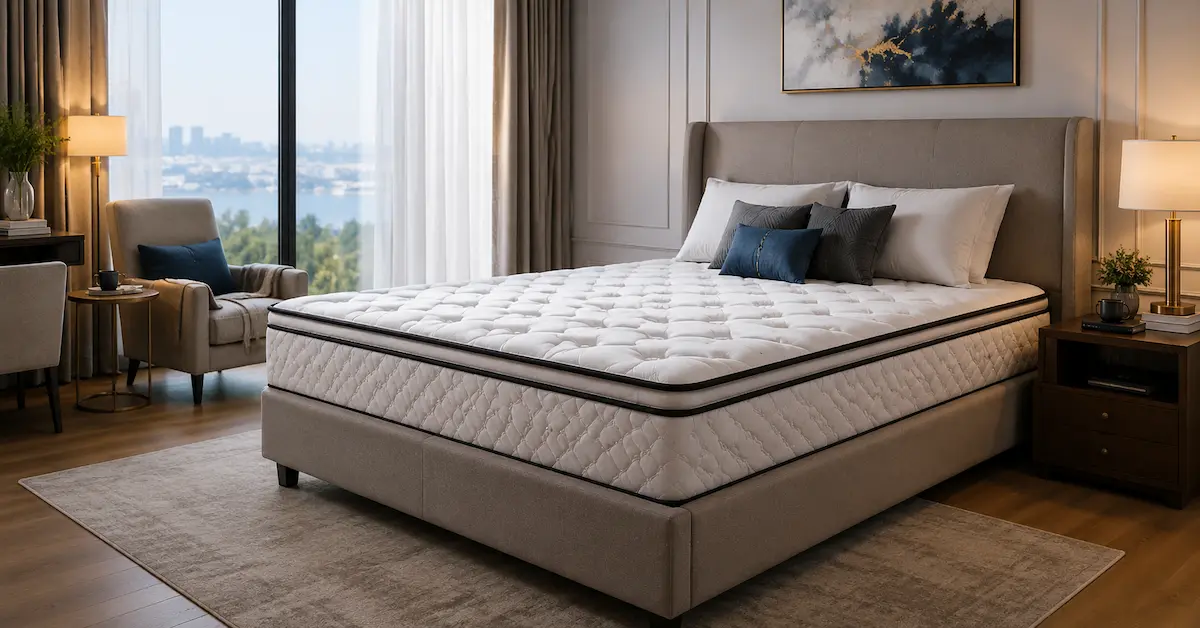

An eco PK cotton mattress layer is an important internal component for compressed mattresses, hotel mattresses, hybrid mattresses, and private label bedding products. Although buyers often focus on the visible cover, foam, spring system, or packaging, the internal isolation layer can strongly affect mattress stability, comfort, breathability, and long-term structure.
For hotels, serviced apartments, bedding brands, and mattress distributors, a good mattress is not made from one material alone. It depends on how each layer works together. The eco PK cotton layer can help separate materials, improve structural balance, support airflow, and protect the comfort system from direct friction with spring or support layers.
As a compressed sofa and mattress manufacturer, CV Castle focuses on compressed mattress and bedding solutions for international buyers. For buyers developing compressed mattress products, the right internal layer can improve product reliability, packing recovery, and overall sleeping experience.
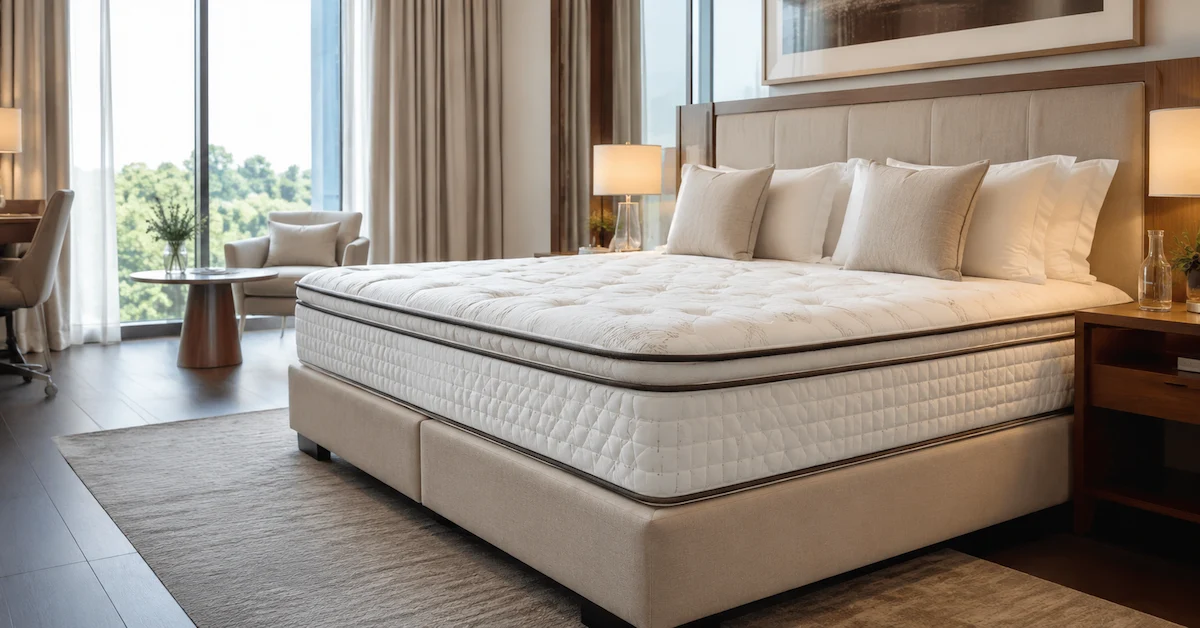
What Is an Eco PK Cotton Mattress Layer?
An eco PK cotton mattress layer is a non-woven or needle-punched cotton-based isolation layer used inside a mattress. It is commonly placed between foam, spring, fabric, or support materials to improve separation, stability, and comfort.
In mattress production, this layer may be used for:
- Foam mattress structures
- Pocket spring mattresses
- Hybrid mattresses
- Roll packed mattresses
- Hotel mattresses
- Mattress-in-a-box products
- OEM compressed mattress projects
- Private label bedding lines
The word “eco” usually refers to a more environmentally conscious or cleaner material positioning. The “PK cotton” layer is often used as a functional support and isolation material rather than a decorative surface layer.
For B2B buyers, the key question is not only whether the material is soft. The real question is whether the layer can remain stable, breathable, durable, and suitable for compression packing.
Why the Isolation Layer Matters in Mattress Design
A mattress is a layered product. If the layers do not work together properly, the mattress may feel uneven, deform faster, or fail to recover well after compression.
An eco PK cotton mattress layer can help improve:
| Buyer Need | Layer Value |
|---|---|
| Better layer separation | Reduces direct friction between materials |
| More stable structure | Helps keep mattress layers organized |
| Breathable comfort | Supports airflow within the mattress |
| Compression compatibility | Helps maintain structure after packing |
| Cleaner material positioning | Supports eco-friendly product messaging |
| Bulk consistency | Makes mattress structure easier to control |
For hotel and apartment projects, internal stability matters because mattresses are used frequently by many different sleepers. For e-commerce mattress brands, structure stability is also important because the mattress must look and feel good after unpacking.
Main Buyer Groups for Eco PK Cotton Mattress Layers
Mattress Brands
Bedding brands can use an eco PK cotton mattress layer to improve the internal structure of their mattress product line. It is especially useful for brands developing compressed mattresses, hybrid mattresses, and mattress-in-a-box products.
Hotels and Resorts
Hotels need mattresses that feel stable and perform consistently across many rooms. A quality isolation layer helps support the internal mattress structure, especially when the mattress combines foam and spring materials.
Serviced Apartments
Serviced apartments and rental housing projects need durable mattresses that can handle long-term use. Internal layers help reduce friction and support better product stability.
Mattress Manufacturers and OEM Buyers
For OEM buyers, the eco PK cotton layer can be part of the technical specification. It helps define product quality, structure, and cost level more clearly.
Furniture Distributors
Distributors can use mattress structure details as a selling point when offering compressed mattresses to hotel buyers, apartment projects, or retail channels.
Where Is the Eco PK Cotton Layer Used?
The eco PK cotton mattress layer is usually not the top layer that users directly touch. Instead, it is part of the internal mattress structure.
Common positions include:
- Between foam and spring layers
- Between fabric cover and comfort materials
- Above pocket spring systems
- Below comfort foam layers
- Around support or isolation sections
- Inside compressed hybrid mattress structures
Its role is similar to a stabilizing and separating layer. It helps different materials work together more smoothly.
For buyers reviewing mattress samples, it is useful to ask the supplier for a layer-by-layer structure diagram. This makes the product easier to compare and avoids vague descriptions such as “premium mattress structure.”
Eco PK Cotton Layer vs Standard Mattress Layer
Different internal layers serve different purposes. Buyers should compare materials based on function, cost, and target market.
| Layer Type | Main Function | Best For | Buyer Concern |
| Eco PK cotton mattress layer | Isolation, breathability, stability | Compressed mattresses, hybrid mattresses, hotel mattresses | Check thickness and density |
| Non-woven fabric layer | Basic separation | Budget mattresses and simple structures | May offer limited cushioning |
| Felt layer | Stronger protection and support | Spring mattresses | Can feel firmer |
| Foam layer | Comfort and cushioning | Comfort-focused mattresses | Density must be checked |
| Latex layer | Resilience and premium comfort | High-end mattresses | Higher cost |
For buyers who want a balance of structure, breathability, and cost control, an eco PK cotton mattress layer can be a practical internal material choice.
Key Specifications Buyers Should Check
Before choosing an eco PK cotton mattress layer supplier or confirming a mattress structure, buyers should check the technical details.
1. Material Density
Density affects durability, thickness, support feel, and structural performance. A layer that is too light may not provide enough separation or stability.
Buyers should ask:
- What is the material density?
- What is the layer thickness?
- Is the density consistent across production batches?
- Is the material suitable for compressed mattresses?
- Does it maintain structure after packing?
2. Breathability
For mattresses used in hotels, apartments, and warm markets, airflow matters. A breathable internal layer can help support overall mattress comfort.
Buyers should check whether the layer blocks airflow or supports ventilation between materials.
3. Compression Recovery
For compressed mattresses, every internal layer must handle vacuum packing or roll packing. If the isolation layer wrinkles, shifts, or deforms after compression, the finished mattress may look uneven after unpacking.
Before bulk ordering, buyers should test:
- Layer position after unpacking
- Mattress surface smoothness
- Recovery height
- Edge stability
- Comfort after 24–72 hours
- Material movement inside the mattress
CV Castle’s compressed mattress products are designed for buyers who need compact packing, export-ready supply, and flexible mattress structure development.
4. Compatibility with Foam and Springs
An eco PK cotton mattress layer should work well with nearby materials. It should not create excessive friction, noise, or uneven pressure between the foam and spring system.
This is especially important for hybrid mattresses and orthopedic spring mattresses.
OEM and ODM Mattress Structure Customization
For OEM mattress projects, internal materials should be clearly defined. A professional supplier should help buyers choose the right layer structure based on comfort level, price point, packaging method, and target market.
Common customization options include:
| OEM Item | Customization Options |
| Mattress size | Single, twin, full, queen, king, custom hotel sizes |
| Mattress height | Different thickness options |
| Internal layer | Eco PK cotton, felt, non-woven, foam, latex |
| Comfort layer | High-density foam, memory foam, latex, fiber |
| Support core | Foam core, pocket spring, hybrid structure |
| Fabric cover | Knit fabric, cotton-blend fabric, quilted cover |
| Packing | Vacuum packing, roll packing, carton packing |
| Branding | Logo label, private label, custom carton |
| Market use | Hotel, apartment, e-commerce, wholesale |
CV Castle provides OEM and ODM support for compressed mattress and bedding-related products. Buyers can review the company’s service background through the About Us page.
Quality Control Points for Eco PK Cotton Mattress Layers
Quality control should not only focus on the finished mattress appearance. Internal layers also need inspection because they affect durability and comfort.
Important QC points include:
| QC Point | Why It Matters |
| Material inspection | Confirms correct layer type and quality |
| Density checking | Keeps structure consistent |
| Thickness inspection | Ensures stable mattress feel |
| Size cutting check | Prevents layer mismatch |
| Layer placement inspection | Avoids shifting or uneven structure |
| Compression test | Confirms performance after packing |
| Finished mattress check | Verifies surface smoothness and comfort |
| Final random inspection | Reduces bulk shipment risk |
For B2B buyers, stable internal materials help reduce complaints, improve repeat orders, and protect brand reputation.
Common Buyer Mistakes to Avoid
When sourcing mattresses with an eco PK cotton mattress layer, buyers should avoid these mistakes:
- Focusing only on surface fabric and ignoring internal layers
- Not asking for mattress structure details
- Choosing the lowest-cost isolation layer without testing
- Not checking layer density or thickness
- Skipping compression recovery testing
- Ignoring compatibility with pocket springs
- Not confirming material consistency for bulk orders
- Ordering production without sample approval
A mattress may look good from the outside, but weak internal materials can lead to poor recovery, uneven surface feel, or shorter product life.
Why Work with CV Castle?
CV Castle focuses on compressed sofa and mattress solutions for global buyers. For eco PK cotton mattress layer projects, the company can support buyers who need custom mattress structures, internal material selection, OEM development, and export-ready compressed packing.
CV Castle’s advantages include:
- Experience in compressed mattress manufacturing
- OEM and ODM customization support
- Layer structure development for mattress products
- Options for hotels, apartments, distributors, and bedding brands
- Factory direct cooperation model
- Export packing support for global buyers
For buyers developing a mattress product line, CV Castle can help match internal materials, comfort level, packing method, and target market needs.
FAQ
1. What is an eco PK cotton mattress layer?
An eco PK cotton mattress layer is an internal mattress layer used for isolation, breathability, and structural support between materials such as foam and springs.
2. Is it used on the mattress surface?
Usually no. It is mainly an internal layer, not the top fabric cover. It helps separate and stabilize different mattress materials.
3. Is it suitable for compressed mattresses?
Yes. It can be suitable for compressed mattresses if the material density, thickness, and structure are tested for vacuum packing and recovery.
4. Why is this layer important in hybrid mattresses?
Hybrid mattresses combine foam and springs. The eco PK cotton layer helps separate these materials and supports a more stable internal structure.
5. Can the layer specification be customized?
Yes. Buyers can customize layer thickness, density, size, placement, and mattress structure according to OEM requirements.
6. What should buyers test before bulk production?
Buyers should test material density, thickness, placement, compression recovery, surface smoothness, and finished mattress comfort after unpacking.
7. Can CV Castle support OEM mattress structure projects?
Yes. CV Castle supports OEM and ODM compressed mattress projects, including internal layer selection, fabric, structure, packing, and private label options.
Conclusion
An eco PK cotton mattress layer is a small but important component in compressed mattresses, hotel mattresses, hybrid mattresses, and OEM bedding products. It helps improve material separation, structure stability, breathability, and compression compatibility.
For B2B buyers, choosing the right internal layer can reduce product risk and improve mattress consistency. When evaluating suppliers, buyers should check material density, thickness, breathability, placement, compression recovery, and compatibility with foam or spring systems.
If you are developing compressed mattresses, hotel mattress lines, or private label bedding products, CV Castle can provide customized mattress solutions with OEM and ODM support for global buyers.