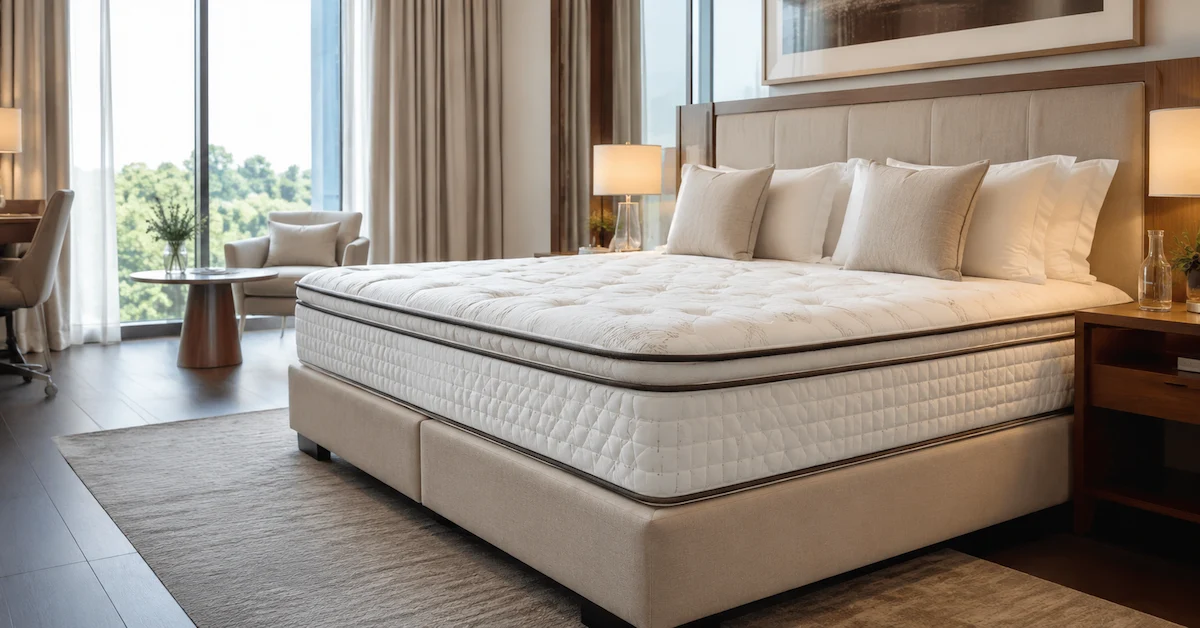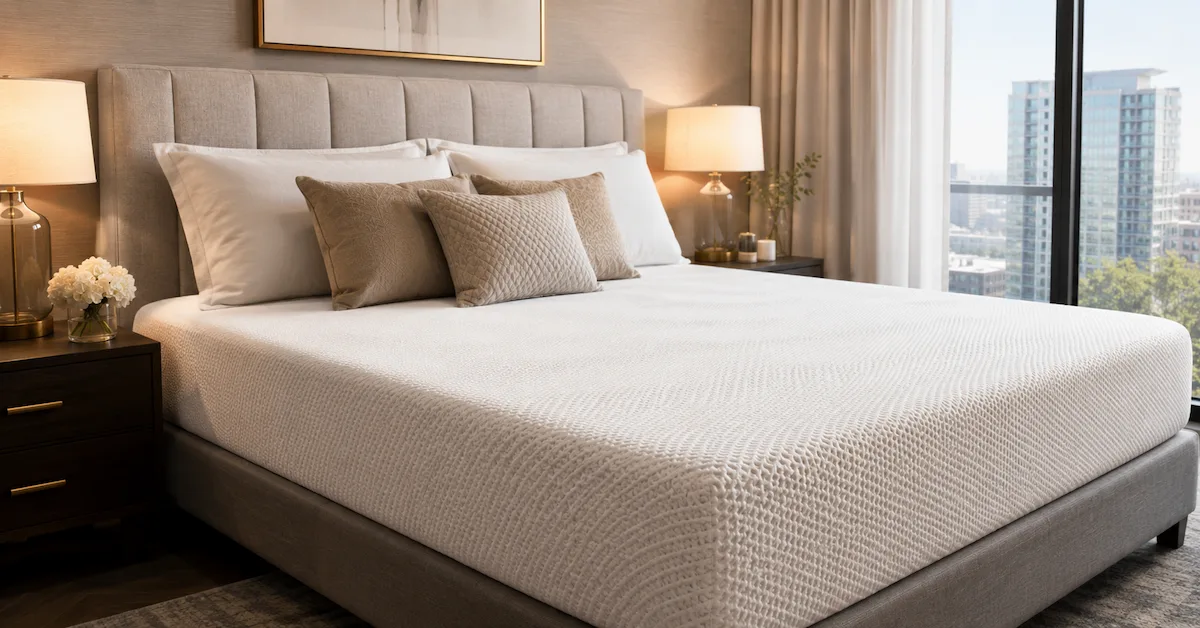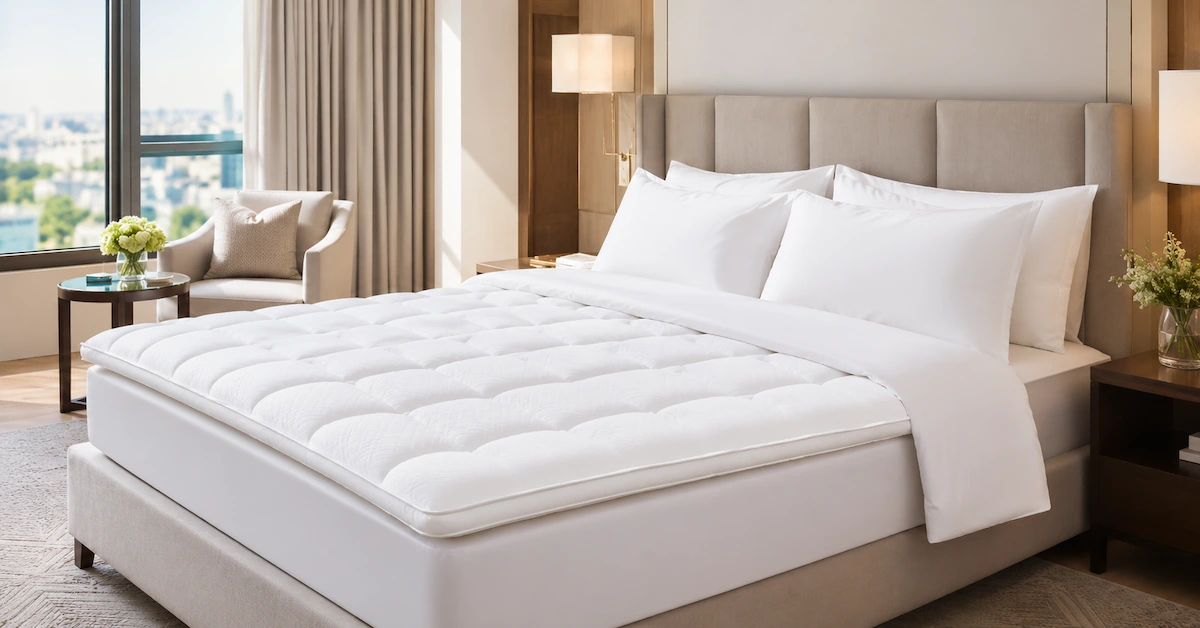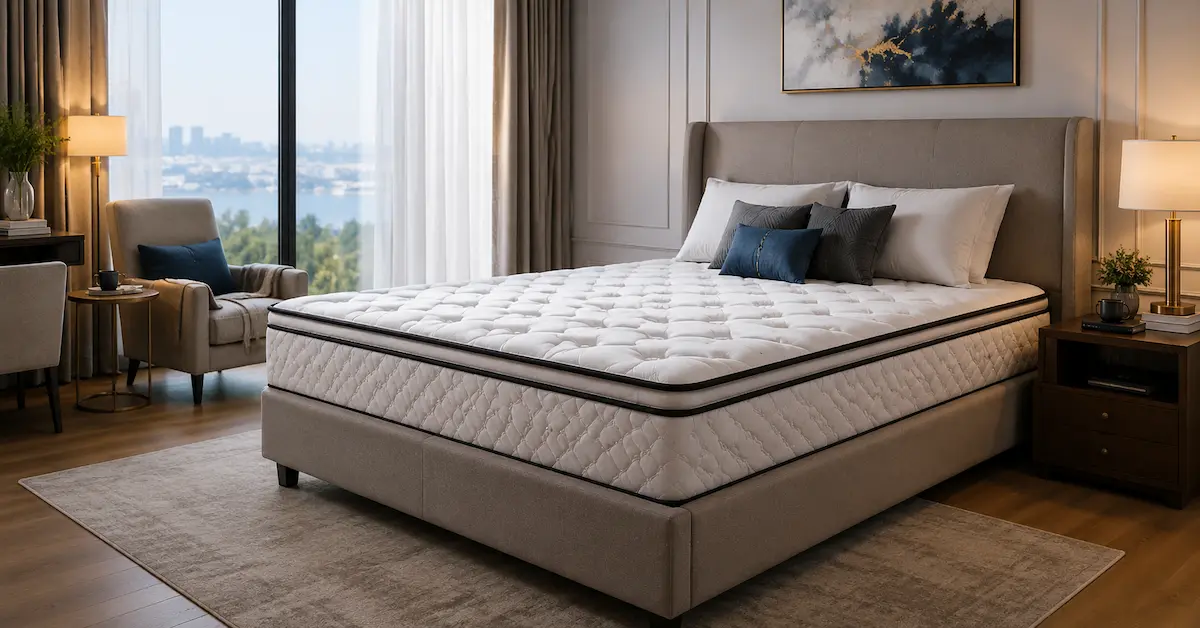

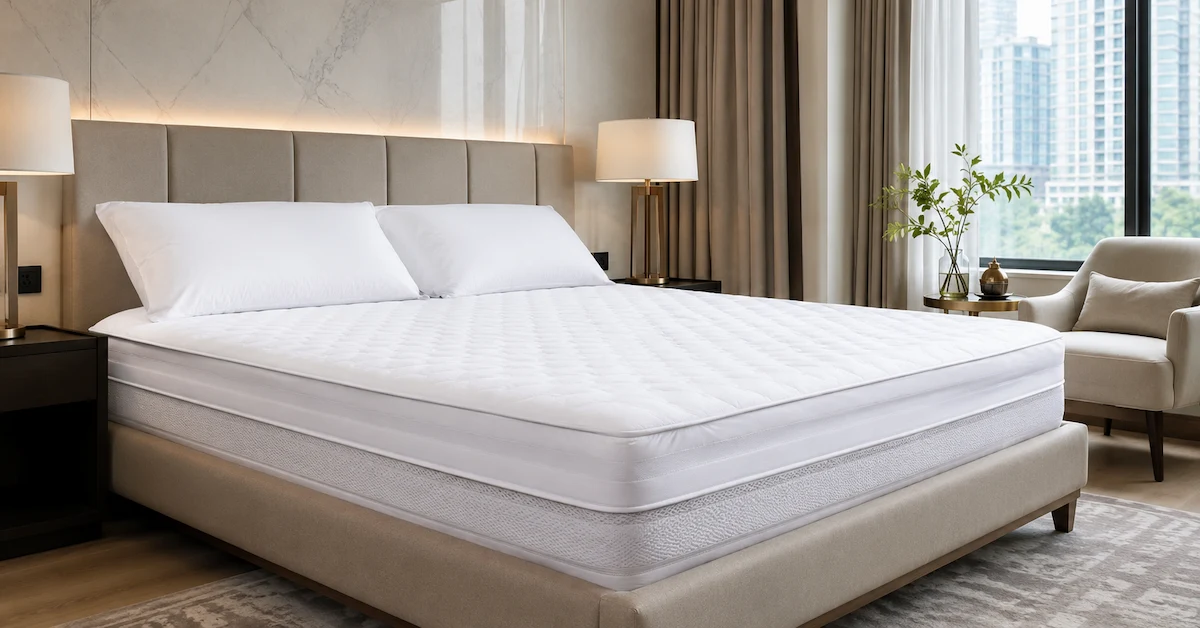
A breathable bottom mattress pad is a small but important component in compressed mattresses, hotel mattresses, hybrid mattresses, and private label bedding products. Buyers often focus on the top cover, foam, spring system, or mattress height, but the bottom layer also affects product stability, airflow, appearance, and long-term use.
For hotels, serviced apartments, bedding brands, and mattress distributors, the mattress bottom should not be treated as an afterthought. A weak bottom pad may wrinkle, tear, trap heat, shift during packing, or make the mattress look less professional after unpacking. A good breathable bottom mattress pad helps the mattress stay cleaner, more stable, and more suitable for export packaging.
As a compressed sofa and mattress manufacturer, CV Castle focuses on compressed mattress and bedding solutions for international buyers. For buyers developing compressed mattress products, the right bottom pad can improve structure reliability, packing recovery, and product presentation.
What Is a Breathable Bottom Mattress Pad?
A breathable bottom mattress pad is the lower fabric or backing layer used at the bottom side of a mattress. It may be made from breathable non-woven fabric, knitted fabric, polyester fabric, cotton-blend fabric, anti-slip fabric, or other durable textile materials.
It is commonly used in:
- Compressed mattresses
- Mattress-in-a-box products
- Hotel mattresses
- Hybrid mattresses
- Foam mattresses
- Pocket spring mattresses
- Apartment mattress packages
- OEM private label bedding lines
The bottom mattress pad is not usually the main comfort layer. Instead, it supports the mattress structure, protects the lower side, improves appearance, and helps the product stay stable during storage, use, and transportation.
For B2B buyers, the key question is not only whether the material looks clean. The real question is whether it is breathable, durable, properly stitched, compatible with compression packing, and consistent across bulk orders.
Why Breathability Matters at the Bottom Layer
Mattress breathability is not only about the top sleeping surface. Airflow inside and around the mattress can also be affected by the bottom fabric. If the bottom layer is too dense or poorly selected, it may reduce ventilation and create a less comfortable product structure.
A breathable bottom mattress pad can help buyers improve:
| Buyer Need | Bottom Pad Value |
|---|---|
| Better airflow | Supports ventilation around the mattress structure |
| Cleaner appearance | Makes the bottom side look professional |
| Improved durability | Helps protect the lower mattress surface |
| Compression compatibility | Supports smoother recovery after packing |
| Better product stability | Helps reduce shifting and wrinkling |
| OEM presentation | Supports private label mattress quality positioning |
For hotels and apartment projects, bottom durability matters because mattresses are moved, installed, cleaned around, and replaced in batches. For e-commerce mattress brands, the bottom pad must also look acceptable after unpacking because customers may inspect the full product during setup.
Main Buyer Groups for Breathable Bottom Mattress Pads
Mattress Brands
Private label bedding brands can use a breathable bottom mattress pad to improve the internal and external quality of their mattress product line. It helps the mattress feel more complete and professional.
Hotels and Resorts
Hotels need mattresses that look clean, stay stable, and perform consistently across many rooms. A durable bottom pad helps protect the mattress during installation and long-term room use.
Serviced Apartments
Serviced apartments and rental housing projects often require mattresses that are practical, durable, and easy to manage. A breathable bottom layer supports long-term use and repeated handling.
Mattress Manufacturers and OEM Buyers
For OEM mattress projects, the bottom layer should be clearly defined in the specification sheet. This helps buyers compare quotations more accurately and avoid hidden material downgrades.
E-Commerce Mattress Sellers
For mattress-in-a-box sellers, compression recovery and product appearance are critical. A breathable bottom mattress pad should not wrinkle badly, tear, or deform after vacuum packing and unpacking.
Breathable Bottom Mattress Pad vs Standard Bottom Fabric
Different bottom materials create different results. Buyers should choose based on the mattress type, target market, and packing method.
| Bottom Material Type | Main Advantage | Best For | Buyer Concern |
| Breathable bottom mattress pad | Airflow, clean finish, structural support | Compressed mattresses, hotel mattresses | Check durability and recovery |
| Standard non-woven bottom fabric | Cost control and basic separation | Budget mattresses | May be less durable |
| Anti-slip bottom fabric | Helps reduce mattress movement | Hotel and apartment projects | Must confirm texture and comfort |
| Quilted bottom layer | Better appearance and structure | Premium mattresses | Higher cost |
| Heavy-duty backing fabric | Stronger protection | Large mattresses and bulk projects | May reduce breathability |
For compressed mattress buyers, breathability and recovery are both important. The bottom pad must handle pressure during packing and still look smooth enough after the mattress expands.
Key Specifications Buyers Should Check
Before choosing a breathable bottom mattress pad supplier or confirming a mattress structure, buyers should check the technical details clearly.
1. Fabric Composition
Buyers should ask what the bottom pad is made from. Common options may include polyester, cotton-blend fabric, non-woven material, or functional backing fabric.
Important questions include:
- What is the material composition?
- Is the fabric breathable?
- Is it suitable for compression packing?
- Does it support anti-slip or stable placement?
- Can it be customized for different mattress lines?
A professional supplier should explain the material in practical terms, not only describe it as “high quality fabric.”
2. Fabric Weight and Thickness
Fabric weight affects durability, hand feel, structure, and cost. A bottom pad that is too thin may tear or look cheap. A pad that is too thick may increase cost or affect packing performance.
Buyers should confirm:
- Fabric GSM
- Thickness
- Surface texture
- Tensile strength
- Color options
- Shrinkage control
- Batch consistency
3. Breathability and Moisture Comfort
For hotel and apartment projects, breathability can support a better product structure. The bottom pad should allow air movement rather than fully blocking ventilation around the mattress.
This is especially useful for mattresses used in warm markets, humid regions, or rooms with long-term occupancy.
4. Compression Compatibility
For compressed mattresses, the bottom pad must handle vacuum packing and roll packing. If the material wrinkles heavily, shifts, or tears after unpacking, it can affect the finished product appearance.
Before bulk production, buyers should test:
- Surface recovery after unpacking
- Wrinkle level
- Edge stability
- Stitching condition
- Bottom fabric position
- Shape after 24–72 hours
CV Castle’s compressed mattress products are designed for buyers who need compact packing, export-ready supply, and flexible mattress structure development.
OEM and ODM Customization Options
A professional OEM compressed mattress material supplier should support customization based on mattress type, price level, and target market.
Common customization options include:
| OEM Item | Customization Options |
| Material | Non-woven, knitted, cotton-blend, polyester backing |
| Color | White, grey, beige, black, custom color |
| Texture | Smooth, anti-slip, breathable, quilted |
| Size | Twin, full, queen, king, custom hotel size |
| Structure | Fixed bottom pad, stitched bottom layer, removable cover part |
| Function | Breathable, anti-slip, reinforced, lightweight |
| Branding | Logo label, woven label, private label support |
| Packaging | Vacuum packing, roll packing, carton packing |
| Market use | Hotel, apartment, e-commerce, wholesale |
CV Castle provides OEM and ODM support for compressed mattress and bedding-related products. Buyers can review the company’s service background through the About Us page.
Quality Control Points for Bottom Mattress Pads
For B2B mattress orders, bottom fabric quality should be checked together with the main mattress structure. Even though users do not sleep directly on the bottom layer, it still affects product durability and presentation.
Important QC points include:
| QC Point | Why It Matters |
| Fabric inspection | Avoids stains, holes, and color difference |
| GSM checking | Keeps fabric weight consistent |
| Breathability check | Confirms material function |
| Size cutting inspection | Prevents mismatch during sewing |
| Stitching inspection | Reduces seam failure |
| Anti-slip check | Confirms placement stability if required |
| Compression test | Confirms recovery after packing |
| Finished mattress check | Verifies final appearance |
| Final random inspection | Lowers shipment risk |
For hotels, distributors, and private label brands, consistency is important. Every mattress should match the approved sample and specification sheet.
Common Buyer Mistakes to Avoid
When sourcing breathable bottom mattress pads or mattresses using this material, buyers should avoid these mistakes:
- Focusing only on the top cover and ignoring the bottom layer
- Choosing the lowest-cost backing without testing
- Not checking fabric GSM
- Ignoring breathability
- Skipping compression recovery testing
- Not confirming anti-slip requirements
- Using weak stitching for hotel mattresses
- Ordering bulk production without sample approval
- Not checking color consistency across batches
- Not defining the bottom pad in the product specification
A mattress may look good from the top, but weak bottom materials can create problems during packing, installation, handling, and long-term use.
Why Work with CV Castle?
CV Castle focuses on compressed sofa and mattress solutions for global buyers. For breathable bottom mattress pad projects, the company can support buyers who need custom mattress structures, material selection, OEM development, and export-ready compressed packing.
CV Castle’s advantages include:
- Experience in compressed mattress manufacturing
- OEM and ODM customization support
- Mattress layer and fabric structure development
- Options for hotels, apartments, distributors, and bedding brands
- Factory direct cooperation model
- Export packing support for global buyers
For buyers developing compressed mattress lines, CV Castle can help match bottom pad material, comfort structure, packing method, and market positioning.
FAQ
1. What is a breathable bottom mattress pad?
A breathable bottom mattress pad is the lower fabric or backing layer used on the bottom side of a mattress to support airflow, structure, durability, and appearance.
2. Is it the same as a mattress topper?
No. A mattress topper is placed on top of a mattress for comfort. A bottom mattress pad is used at the lower side of the mattress as part of the structure or cover system.
3. Why does the bottom layer matter?
The bottom layer affects durability, ventilation, product appearance, packing recovery, and stability during use or installation.
4. Is a breathable bottom pad suitable for compressed mattresses?
Yes. It can be suitable if the material is tested for vacuum packing, roll packing, wrinkle recovery, and stitching stability.
5. Can the bottom mattress pad be customized?
Yes. Buyers can customize material, color, texture, size, GSM, anti-slip function, label, and packing method.
6. What should buyers test before bulk production?
Buyers should test fabric strength, GSM, breathability, stitching, compression recovery, color consistency, and finished mattress appearance.
7. Can CV Castle support OEM mattress material projects?
Yes. CV Castle supports OEM and ODM compressed mattress projects, including fabric selection, internal layer structure, bottom pad design, packing, and private label options.
Conclusion
A breathable bottom mattress pad is an important component in compressed mattresses, hotel mattresses, hybrid mattresses, and private label bedding products. It helps improve airflow, lower-side protection, structure stability, compression compatibility, and overall product presentation.
For B2B buyers, choosing the right bottom pad can reduce quality risks and improve mattress consistency. When evaluating suppliers, buyers should check material composition, fabric weight, breathability, durability, compression recovery, stitching, and OEM customization options.
If you are developing compressed mattresses, hotel mattress lines, apartment bedding packages, or private label mattress products, CV Castle can provide customized mattress solutions with OEM and ODM support for global buyers.